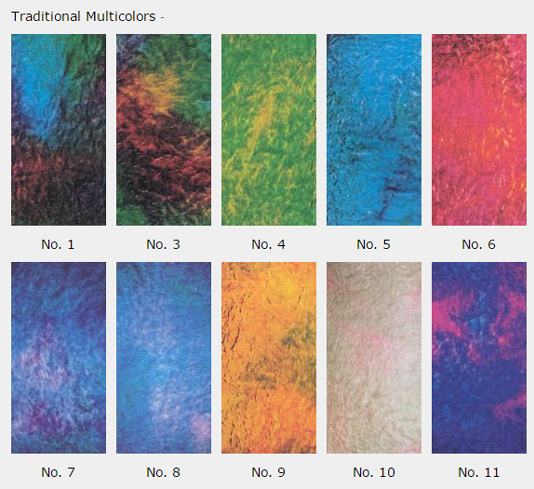
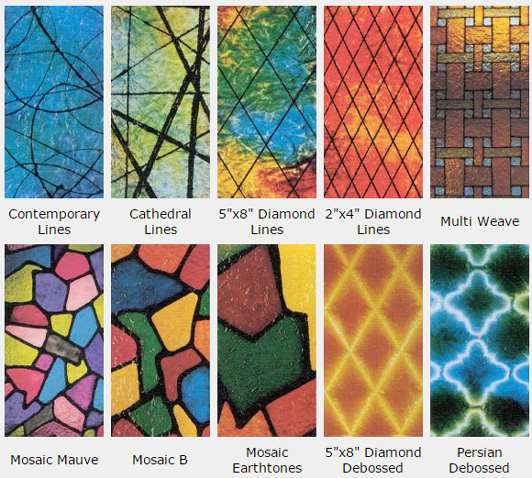
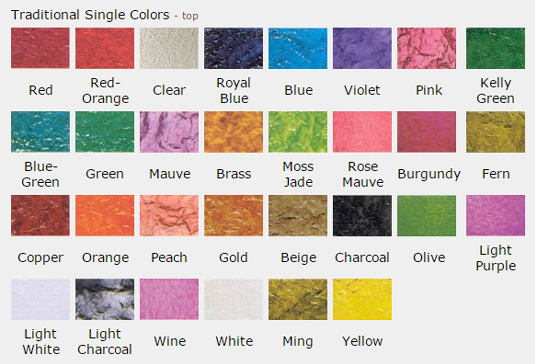
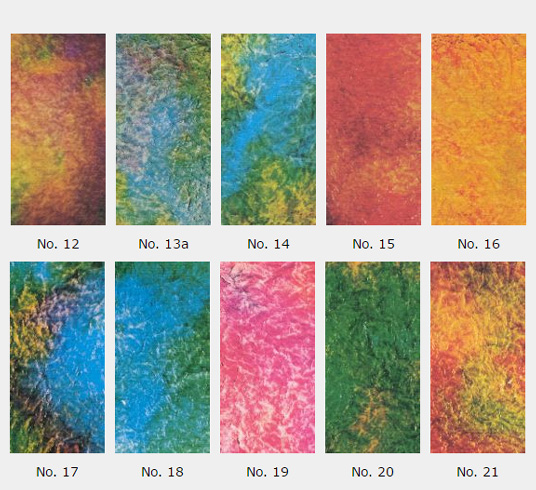
Acrylite FF®
ACRYLITE® FF is a continuously manufactured
acrylic sheet. It is produced by an innovative process, resulting
in a sheet offering the easy handling and processing of extruded
sheet, along with the high optical characteristics and low stress
levels expected of cast products.
The clarity and light stability of acrylic
resin make it possible to manufacture crystal clear ACRYLITE FF
sheet.
Characteristics
ACRYLITE FF acrylic sheet is a lightweight,
rigid and weather-resistant thermoplastic. ACRYLITE FF sheets
are dimensionally stable and resistant to breakage. They can
be easily sawed, machined, heat-formed and cemented.
Because of its virtually distortion-free
clarity, it is well suited for use in a variety of applications.
- Skylights
- Recreational Vehicles
- Boat, Motorcycle, and Snowmobile Farings
|
- Signs
- Displays
- Boutique Items
|
Availability
ACRYLITE FF acrylic sheet is available in
thicknesses from 0.080" to .236", and actual sheet sizes
from 48" x 72" to 72" x 96". All sheets
are protected with polyethylene film or paper masking.
Safety
ACRYLITE FF sheet is safer than glass because
of its greater breakage resistance. If subjected to impact beyond
the limit of its resistance, it does not shatter into small slivers,
but breaks into comparatively large pieces. ACRYLITE FF sheet complies
with American National Standard Z97.1-1975, Safety Glazing for Buildings.
Weather Resistance
ACRYLITE FF will withstand exposure to blazing
sun, extreme cold, sudden temperature changes, salt water spray,
etc. It will not deteriorate after many years of service because
of the inherent stability of acrylic resins. ACRYLITE FF has been
widely accepted for use in school buildings, industrial plants,
aircraft glazing and outdoor signs.
Dimensional
Stability
Although ACRYLITE FF will
expand and contract due to changes in temperature or humidity, it
will not shrink with age. Some shrinkage occurs when ACRYLITE FF
is heated to forming temperature, but post-forming stability is
excellent.
Light Weight
ACRYLITE FF sheet is only half the weight
of glass, and 43% the weight of
aluminum.
Rigidity
ACRYLITE FF sheet is not as rigid as glass
or metals. However, it is more rigid than many other plastics such
as acetates or vinyls. Under wind load a sheet will bow and foreshorten
as a result of deflection.
For glazing installations the maximum wind load and the size of
the window must be considered when the thickness of a panel is to
be determined.
If ACRYLITE FF is formed into ribbed or domed shapes, rigidity
will be increased and deflection minimized. -
top
Cold Flow
Large, flat, ACRYLITE FF sheets, if insufficiently
supported, may deform permanently due to continuous loads such as
snow, or even due to their own weight. Increased rigidity obtained
by forming will minimize cold flow.
Strength
and Stresses
Although the tensile strength of ACRYLITE
FF acrylic sheet is 10,000 psi at room temperature (ASTM 0638),
stress-crazing can be caused by continuous loads below this value.
For glazing applications continuously imposed design loads should
not exceed 1 ,500 psi. For applications subject to continuous loading,
design loads should not exceed 750 psi
at 23°C (73°F).
Localized, concentrated stresses must be avoided. For this reason,
and because of thermal expansion and contraction, large sheets
should never be fastened with bolts, but should always be installed
in frames.
All thermoplastic materials-including ACRYLITE FF sheet--will
gradually lose tensile strength as the ambient temperature approaches
the maximum recommended for continuous service-160°F. -
top
Expansion
and Contraction
Like most other plastics, ACRYLITE FF sheet
will expand and contract I from 3 to 8 times as much as glass or
metals. The designer should be aware of the problems that could
be caused by this rather large coefficient of expansion. A 48" panel
will expand and contract
approximately .002" for each degree F. change in temperature. In
outdoor use, where summer and winter temperatures differ as much
as 100°F., a 48" sheet will expand and contract approximately
¼". Sash rabbets must be of sufficient depth to allow for expansion
as well as for contraction.
ACRYLITE FF sheet also absorbs water when exposed to high
relative humidities resulting in an expansion of the sheet. At relative
humidities of 100%, 80% and 60%, the dimensional changes are 0.3%,
0.2% and 0.1 % respectively. -
top
Heat Resistance
ACRYLITE FF sheets can be used at temperatures from -30°F.
up to + 190°F., depending on the application. It Is recommended
that temperatures not exceed 160°F. for continuous service, or 190°F.
for short intermittent use. Components made of ACRYLITE FF should
not be exposed to high heat sources, such as high wattage incandescent
lamps, unless the finished product is ventilated to permit the dissipation
of heat.
Light Transmission
Clear, colorless ACRYLITE FF acrylic sheet
has a light transmittance of 92%. It is clearer than glass and will
not turn yellow.
Solar Energy
Control
Transparent colored ACRYLITE FF sheet can
be used to reduce glare and solar energy transmittance. Transparent
colored sheets are available in a range of color densities.
This wide range of transmittance values enables the architect to
select a density which will provide adequate daylight and at the
same time will control glare and solar heat build-up.
Chemical
Resistance
ACRYLITE
FF sheet has excellent resistance to many chemicals including:
• solutions of in organic alkalies such as ammonia
• dilute acids such as sulfuric acid
• aliphatic hydrocarbons such as hexane and VM&P naphtha.
ACRYLITE FF is not attacked by most foods, and foods are not affected
by it. It is attacked, in varying degrees, by:
• aromatic solvents such as benzene and toluene
• chlorinated hydrocarbons such as methylene chloride and
carbon tetrachloride
• ethyl and methyl alcohols.
• some organic acids such as acetic acid
• lacquer thinners, esters, ketones and ethers
For a listing of the resistance of ACRYLITE
FF sheet to more than 60 chemicals refer to Table at bottom of page.
Formability
- top
ACRYLITE FF sheet will soften as the temperature is increased
above 170°F. As the temperature is increased the sheet passes through
the thermo elastic state to the thermo plastic state. The change
is gradual rather than sharply defined. The forming temperature
range is between 290°F. and 320°F. Because the sheet gradually becomes
thermo plastic certain procedures should be considered during thermoforming:
if the sheet is to be hung in an oven it will be necessary to use
a continuous clamp rather than several individual clamps to prevent
the sheet from permanently deforming between clamps; if the sheet
is to be heated by infra red heaters while clamped in a horizontal
frame it may be necessary to block out the heaters above the center
of the sheet to prevent the center from becoming too hot and permanently
sagging and deforming under its own weight.
The sheet will exhibit very little "memory" after forming and probably
will not return to its original flat condition if reheated.
ACRYLITE FF will shrink in the machine direction when heated without
a frame. Sheets up to 3mm thick will shrink a maximum of 6%. Sheets
thicker than 3mm will shrink a maximum of 3%.
Some expansion may occur in the transverse machine direction. This
will be limited to less than 2% in all cases.
Cutting and Machining
ACRYLITE FF sheet can be sawed on circular saws or band saws.
It can be drilled, routed, filed and machined much like hardwood
or brass. Because the new sheet softens quickly, it is necessary
to keep the cutting tool and machined edge of the sheet as cool
as possible. Cooling of the cutting tool is recommended. Tool sharpness
and "trueness" are essential to prevent gumming, heat buildup and
stresses in the part. Heat buildup at the machined edge could lead
to subsequent stress crazing and therefore must be avoided.
Laser Cutting
Laser technology is being rapidly accepted by industry
for quickly and accurately cutting, welding, drilling, scribing,
and engraving plastics.
CO2 lasers focus a large amount of light
energy on a very small area which is extremely effective for cutting
complex shapes in acrylic sheet. The laser beam produces a
narrow kerf in the plastic allowing for close nesting of parts and
minimal waste. CO2 lasers vaporize the acrylic as they advance
resulting in a clean polished edge but with high stress levels;
annealing acrylic sheet after laser cutting is recommended to minimize
the chance of crazing during the service life of the part.
Cementing
ACRYLITE FF acrylic sheet can be cemented
using common solvent cements or polymerizable cements. The most
critcial factor is the edge of the part to be cemented. The edge
must have been properly machined so as to have no stresses in the
edge. Annealing of the part prior to cementing is recommended. Cement
and cement fumes should not contact formed or polished surfaces.
Flammability
ACRYLITE FF acrylic sheet is a combustible
thermoplastic. Precaution should be used to protect material from
flames and high heat sources. Access panels may be required for
evacuation and venting of rooms glazed with ACRYLITE FF acrylic
sheet.
It has a burning rate of 1.0 inches per minute
(for 1/8 inch thickness) according to ASTM 0-635.
Other properties related to flammability:
Flame spread is 175 according to ASTM E-84 or 100-145 according
to ULC-S102.2.
The self-ignition temperature is 830°F. ,
when measured in accordance with ASTM 0-1929. Smoke density measured
by ASTM 0-2843 is 5%-10%.
While these test data are based on small
scale laboratory tests, frequently referenced in various Building
Codes, these tests do not duplicate actual fire conditions.
The products of combustion, if sufficient
air is present, are carbon dioxide and water. However, in many fires
sufficient air will not be available and toxic carbon monoxide will
be formed as it will from other common combustible materials.
Consult your Building Code for approved uses
for ACRYLITE FF acrylic sheet
Thermal
Conductivity - top
The thermal conductivity of a material-its
ability to conduct heat-is called k-Factor. The k-Factor is an inherent
property of the material, and is independent of its thickness and
of the surroundings to which it is exposed.
The
k-Factor of ACRYLITE FF sheet is:
1.3 B.T.U.
(hour) (sq. ft.) (OF./inch)
Whereas the
k-Factor is a physical property of the material, the U-Factor -or
overall coefficient of heat transmission-is the value used to calculate
the total heat loss or gain through a window.
The U-Factor
is the amount of heat, expressed in BTU's, which will pass through
one square foot of a material of a specific thickness, per hour,
for each degree F. difference between inside and outside air temperatures.
This value
takes into account the thickness of the sheet, whether the sheet
IS in a horizontal or vertical position, as well as the wind velocity.
U-Factors
are based on specific conditions (e.g., single-glazed or double-glazed
installations) and are different for summer and winter.
Listed below are U-Factors for several thicknesses of ACRYLITE FF
sheet for single-glazed, vertical installations, based on the standard
ASHRAE* summer and winter design conditions.
| U-Factors--BTU/hour
sq. ft. Fº .
| ACRYLITE
FF Sheet Thickness |
Summer Conditions |
Winter Conditions |
| 1/8" |
0.98 |
1.06 |
| 3/16 |
0.94 |
1.02 |
| 1/4 |
0.90 |
0.97 |
| 5/16 |
0.87 |
0.93 |
| 3/8 |
0.83 |
0.89 |
|
* American
Society of Heating, Refrigerating and Air-Conditioning Engineers
The total heat loss or gain through a window
(due to temperature difference only) can be calculated by multiplying
the area of the window in square feet, times the difference between
indoor and outdoor temperatures in degrees Fahrenheit, times the
appropriate U-Factor (from Table above). The answer will be expressed
in BTU's per hour. Heat intake through solar radiation must be added
to arrive at the total heat gain.
ACRYLITE FF sheet is a better insulator than
glass. Its U-Factor or overall coefficient of heat transfer is approximately
10% lower than that of glass of the same thickness.
Thermal
Shock and Stresses
ACRYLITE FF sheet is more resistant than
glass to thermal shock and to stresses caused by substantial temperature
differences between a sunlit and a shaded area of a window or between
opposite surfaces of a window.
Surface
Hardness
The surface of plastics is not as hard as
that of glass. Therefore, reasonable care should be exercised
in handling and cleaning ACRYLITE FF sheet.
Electrical
Properties
ACRYLITE FF has many desirable electrical
properties. It is a good insulator. Its surface resistivity is higher
than those of rpost plastics. Continuous outdoor exposure has little
effect on its electrical properties..
Physical
Properties of ACRYLITE FF - top
| Property(a) |
|
ASTM
Method |
Typical
Value
(.236" Thickness)(b) |
| Mechanical |
| Specific Gravity |
D 792 |
1.19 |
| Tensile
Strength
Elongation,
Rupture
Modulus
of Elasticity |
D 638 |
10,000
psi (69 M Pa)
4.5%
400,000 psi
(2800 M Pa) |
| Flexural
Strength (Rupture)
Modulus
of Elasticity |
D 790 |
17,500
psi (117 M Pa)
480,000 psi
(3300 M Pa) |
| Compressive
Strength (Yield) |
D 695 |
17,000
psi (117 M Pa) |
| Impact
Strength
Izod
Milled Notch |
D 256 |
0.4
ft. lbs/in. of notch
(21.6 J/m of
notch) |
| Rockwell
Hardness |
D 5 |
M-93 |
| Barcol
Hardness |
D 2583 |
48 |
|
| Optical
(Clear
Material) |
| Refractive Index |
D 542 |
1.49 |
| Light
Transmission, Total |
D 1003 |
92% |
|
| Thermal |
| Forming
Temperature |
-- |
300ºF (149ºC) |
| Deflection
Temperature
under
load, 264 psi |
D 648 |
195ºF (91ºC) |
| Vicat
Softening Point |
D 1525 |
230ºF (110ºC) |
| Maximum
Recommended Continuous
Service Temperature |
-- |
160ºF(d) (71ºC) |
| Coefficient
of Linear Thermal Expansion |
D 696 |
.00004
in/in-ºF
(.000064 in/in-ºC) |
| Coefficient
of
Thermal Conductivity
(k-Factor) |
Cenco-Fitch |
1.3
BTU/(Hr)(Sq. Ft.)(ºF/in.)
(0.19 w/m*K) |
| Flammability
(Burning Rate
3mm
thickness) |
D 635 |
1.0
in/min.
(25 mm/min.) |
| Self-Ignition
Temperature |
D 1929 |
830ºF (443ºC) |
| Specific
Heat @ 77ºF. |
-- |
0.35
BTU/(lb.)(ºF)
(1470J/Kg*k) |
| Smoke
Density Rating |
D 2843 |
5-10% |
|
| Electrical |
| Dielectric
Strength
Short
Time (0.125"-thickness) |
D 149 |
430
volts/mil (17 KV/mm) |
| Dielectric
Constant
60 Hertz
1,000
Hertz
1,000,000
Hertz |
D 150 |
3.6
3.3
2.8 |
| Dissipation
Factor
60 Hertz
1,000
Hertz
1,000,000
Hertz |
D 150 |
0.06
0.04
0.02 |
| Volume
Resistivity |
D 2 |
1016ohm-cm |
| Surface
Resistivity |
D 2 |
1015ohms |
|
| Water
Absorption |
24
hrs @ 73ºF |
D 0 |
0.2% |
| Odor |
|
-- |
None |
| Taste |
|
-- |
None |
Chemical Resistance
of Acrylite FF
The table below gives an indication of the chemical resistance
of ACRYLITE FF. The code used to describe chemical resistance
is as follows--
R=Resistant
ACRYLITE
FF withstands this substance for long periods and at temperatures
up to 120°F(49°C).
LR=Limited
Resistance
ACRYLITE
FF only resists the action of this substance for short periods at
room temperatures. The resistance for a particular application
must be determined.
N=Not Resistant
ACRYLITE FF is not resistant to this substance. It is either
swelled, attacked, dissolved or damaged in some manner.
Plastic materials can be
attacked by chemicals in severval ways. The methods of fabrication
and/or conditions of exposure of ACRYLITE FF sheet, as well as the
manner in which the chemicals are applied, can influence the final
results even for "R" coded chemicals. Some of these
factors are listed below:
Fabrication--Stress generated while sawing, sanding,
machining, drilling, and /or forming.
Exposure--Length of exposure, stresses induced
during the life of the product due to various loads, changes in
temperatures, etc.
Application of Chemicals--by contact, rubbing,
wiping, spraying, etc.
The table should therefore be used as only
a general guide and, in case of doubt, it should be supplemented
by tests made under actual working conditions.
| Chemical |
Code |
Chemical |
Code |
| Acetic Acid(5%) |
LR |
Hydrogen Peroxide (3%) |
R |
| Acetic Acid(Glacial) |
N |
Hydrogen Peroxide (28%) |
LR |
| Acetone |
N |
Isopropyl Alcohol |
LR |
| Ammonium Chloride |
R |
Kerosene |
R |
| Ammonium Hydroxide(10%) |
R |
Lacquer Thinner |
N |
| Ammonium Hydroxide(Conc.) |
R |
Methyl Alcohol(30%) |
LR |
| Aniline |
N |
Methyl Alcohol(100%) |
N |
| Battery Acid |
R |
Methyl Ethyl Ketone (MEK) |
N |
| Benzene |
N |
Methylene Chloride |
N |
| Butyl Acetate |
N |
Mineral Oil |
R |
| Calcium Chloride (Sat.) |
R |
Nitric Acid(10%) |
R |
| Calcium Hypochlorite |
R |
Nitric Acid(40%) |
LR |
| Carbon Tetrachloride |
LR |
Nitric Acid(Conc.) |
N |
| Chloroform |
N |
Oleic Acid |
R |
| Chromic Acid |
LR |
Olive Oil |
R |
| Citric Acid(10%) |
R |
Phenol Solution(5%) |
N |
| Cottonseed Oil(Edible) |
R |
Soap Solution(Ivory) |
R |
| Detergent Solution (Heavy Duty) |
R |
Sodium Carbonate(2%) |
R |
| Diesel Oil |
R |
Sodium Carbonate(20%) |
R |
| Diethyl Ether |
N |
Sodium Chloride(10%) |
R |
| Dimethyl Formamide |
N |
Sodium Hydroxide(1%) |
R |
| Dioctyl Phthalate |
N |
Sodium Hydroxide(10%) |
R |
| Ethyl Actate |
N |
Sodium Hydroxide(60%) |
R |
| Ethyl Alcohol(30%) |
LR |
Sodium Hypochlorite(5%) |
R |
| Ethyl Alcohol(95%) |
N |
Sulfuric Acid(3%) |
R |
| Ethylene Dichloride |
N |
Sulfuric Acid(30%) |
R |
| Ethylene Glycol |
R |
Sulfuric Acid(Conc.) |
N |
| Gasoline |
LR |
Toluene |
N |
| Glycerine |
R |
Transformer Oil |
R |
| Heptane |
R |
Trichloroethylene |
N |
| Hexane |
R |
Turpentine |
R |
| Hydrochloric Acid |
R |
Water (Distilled) |
R |
| Hydrofluoric Acid (25%) |
N |
Xylene |
N |
|