
CPVC Vintec®
VINTEC is a high temperature grade chlorinated Polyvinyl Chloride that has excellent corrosion resistance, high heat resistance and is easily fabricated. Vintec has a wide range of industrial applications including the chemical processing and metal finishing industries. Quality controlled production techniques utilized by Compression Polymers insure maximum benefit from CPVC Vintec.
Applications
CPVC has a proven performance record in a wide range of industrial markets.
- Pipe & Fittings
- Spacers
- Insulators for tanks
- Lining (Corrosion Resistant)
- Valves
- Bushings
- Drip Racks
- tiffeners
Industries Served
- Waste Treatment
- Chemical Processing
- Pickling
- Metal Finishing
- Metal Anodizing
- Fume Scrubbing
Resistance Characteristics
- Corrosion- CPVC has excellent corrosion resistance to a wide range of alkalies and acids
- Heat -When high temperature applications are required CPVC exhibits exceptional heat resistance and provides maximum corrosion resistance at
elevated temperatures - Fire -CPVC is rated as self-extinguishing and will not support combustion
- Electrical -CPVC has good electrical insulation properties
Fabrication
CPVC can easily be machined with wood-working tools. In addition CPVC can be threaded, riveted, fiberglass backed, cementable (solvent bonding), and is hot gas weldable with rod.
Fabrication Characteristics
Thermoplastic preparation for assembly (welding or other fastening methods) is similar to metal fabrication procedures. Pieces are laid out, cut, machined and joined with the same tools, equipment and skills utilized in the metalworking trades. However, there are special forming requirements for thermoplastics not encountered in metal work. Fabrication of thermoplastics includes a wide range of operations on sheet, rod, tube and special shapes to produce finished products. Fabrication involves cutting, sawing, machining, forming, joining or fastening together for the completed object. Machining may include beveling, routing, grinding, turning, milling, drilling, tapping and threading.
Once the different thermoplastic parts are formed into the proper shape, they may then have to be joined. The type and method of assembly depend on the function of the finished structure. The several assembly techniques include the use of adhesive bonding, self-tapping screws, threaded insets, press fitting, cold heading, heat joined (hot- plate welding, hot-wire welding, induction heating, hot flaring, and spin welding) cementing and hot gas welding. Each operation requires its own tools and equipment.
Standard Product Specifications
Sheet 48 in. x 96 in

Full-service plastics fabricator and supplier of plastic materials










Norva Plastics has been a full-service plastics fabricator and supplier of plastic materials. With over half a century in the business, we can tackle just about any job with confidence that comes from experience. From a tough prototype to long-run production, whatever your requirement, contact the experienced plastics fabricators first at Norva Plastics.
Norva Plastics provides many services relating to plastics and similar materials. We have 3 high precision CNC machines in house to handle high production jobs or for quick prototype jobs. We also do custom fabrication and also offer vacuum forming services. So contact us now! We look forward to serving you.
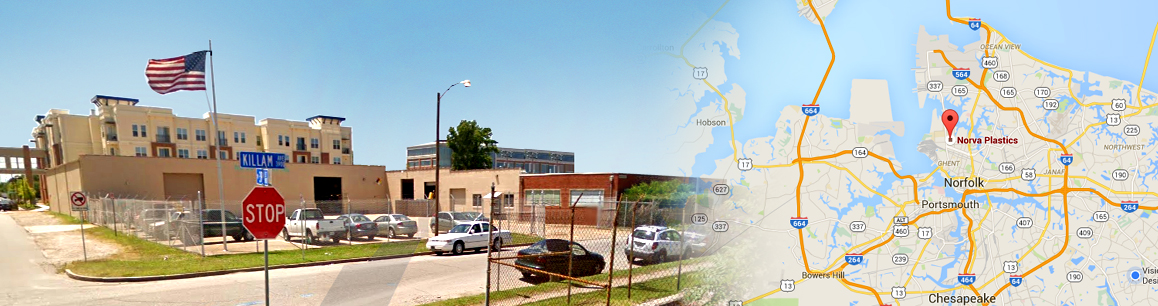
Norva Plastics • 3911 Killam Ave., Norfolk, Virginia 23508
Open 8:00AM to 4:30PM Monday through Friday
Toll Free: 1(800) 826-0758 • Ph: (757) 622-9281 • Fax: (757) 623-2859 • Email: info@norvaplastics.com
