|
HITEC®
HITEC, the high impact
strength, high density Polyethylene from Compression Polymers. In
addition, HITEC has excellent abrasion resistance, tensile strength,
energy absorption, and resistance to stress cracks.
HITEC is available in sheet, rod, bar, and slab stock.
Specially designed shapes are available for specific jobs. Quality
controlled ingredients are precision blended to maximize the wide
range of properties of HITEC including its self-lubricating paraffin
like surface characteristics.
Applications
HITEC has proven
characteristics of high impact strengths, abrasion resistance, self-lubricating
and is completely water-repellent.
• Business Machine Parts
• Rotors and Blades
• Rotors and Blades
• Guilds & Wear Plates
• Roll Stand Bearings
• Cams, Washers, Shims
• Nuclear Storage Containers
• Packing/Rings in Chemical Applications
• Skids and Deflector Plates
• Low Speed Bearings
• Tank, Chute and Bin Linings
• Laboratory Vessels
Resistance
Characteristics - top
• Abrasion --
The extremely high molecular weight of HITEC combined with its very
low coefficient of friction provides an excellent abrasion resistant
product preventing gouging, scuffing, and scraping
• Impact -- HITEC
is one of the highest impact resistant thermoplastics available
and maintains excellent machinability and self-lubricating characteristics.
Properties are maintained even at extremely low temperatures
• Chemical -- HITEC
has very good chemical resistance of corrosives as well as stress
cracking resistance (With the exception of strong oxidizing acids
at elevated temperatures. Certain hydrocarbons cause only
a light surface swelling at moderate temperature.)
• Water -- Moisture
and water (including salt water) have no affect on HITEC.
Can be used in fresh and salt water immersion applications
Fabrication
Characteristics - top
Thermoplastic preparation for assembly (welding
or other fastening methods) is similar to metal fabrication procedures.
Pieces are laid out, cut, machined and joined with the same tools,
equipment and skills utilized in the metalworking trades. However,
there are special forming requirements for thermoplastics not encountered
in metal work.
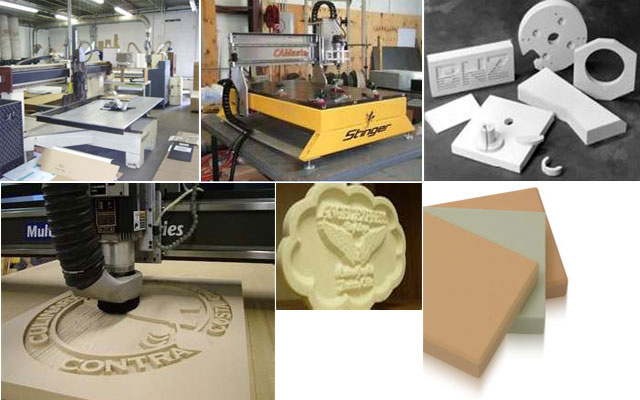
Fabrication of thermoplastics includes a
wide range of operations on sheet, rod, tube and special shapes
to produce finished products. Fabrication involves cutting, sawing,
machining, forming, joining or fastening together for the completed
object. Machining may include beveling, routing, grinding, turning,
milling, drilling, tapping and threading.
The degree of skill and the quality of preparatory
work in layout and various machining operation on components for
fit-up are very important in assuring accurate assembly and successful
fabrication.
Once the different thermoplastic parts are
formed into the proper shape, they may then have to be joined. The
type and method of assembly depend on the function of the finished
structure. The several assembly techniques include the use of adhesive
bonding, self-tapping screws, threaded insets, press fitting, cold
heading, heat joined (hot plate welding, hot-wire welding, induction
heating hot flaring, and spin welding) cementing and hot gas welding.
Each operation requires its own tools and equipment.
Standard Production
Specifications
• Sheet Size 48 in. x 96 in.,
48 x 120 in., 60 x 120 in
• Thickness .60 to 2 in
• Colors -- Natural (Stock)
Additional colors on request |
 |